Mozzarella Cheese Nutrition Facts
A 100 g serving of mozzarella cheese contains 300 kcal, 22.1g protein (lime), 22.1g fat (pink) and 2.5g carbohydrate (blue). It has no fiber and almost no sugar. Its standout micronutrients are vitamin B12 (2.1 µg), saturated fat (13.9 g).
Core Nutrients per 100 g
PER 100 G SERVINGThe six values MacroDrop shows on every meal card: energy, the three macros, fiber and sugars.
Extended Nutrients
PER 100 G SERVINGGrouped as in the app: lipids, minerals, vitamins and other compounds sit one level below the core six. Daily values follow the FDA 2,000 kcal reference.
Understanding Mozzarella Cheese Nutrition
Mozzarella Cheese is a dairy food valued for its calcium, protein and fat content. At 300 kcal per 100 g serving, it provides 22.1g of protein, 2.5g of carbohydrate and 22.1g of fat. Mozzarella Cheese is particularly rich in vitamin B12, delivering 2.1µg — 96% of the daily value — in a single serving. It has no fiber and almost no sugar.
For athletes and anyone tracking macros, mozzarella cheese is calorie-dense and works well for adding calories without added volume, thanks to its fat content. It pairs well with slower-digesting carbohydrate sources across a meal, and its 22.1g protein per 300 kcal gives a favorable protein-to-calorie ratio for cutting or maintenance.
Frequently Asked Questions
How many calories are in a 100 g serving of mozzarella cheese?
A 100 g serving of mozzarella cheese has 300 kcal, 22.1g protein, 22.1g fat and 2.5g carbohydrate.
How much protein is in mozzarella cheese?
22.1g per 100 g serving. This is a complete or near-complete protein source that contributes meaningfully to daily amino acid needs.
Is mozzarella cheese high in saturated fat?
Mozzarella Cheese has 13.9 g of saturated fat per 100 g serving (68% DV).
Which nutrients is mozzarella cheese richest in?
Mozzarella Cheese is richest in vitamin B12 (2.1 µg), saturated fat (13.9 g).
Is mozzarella cheese good for tracking macros?
For athletes and anyone tracking macros, mozzarella cheese is calorie-dense and works well for adding calories without added volume, thanks to its fat content.
Log the mozzarella cheese in two seconds
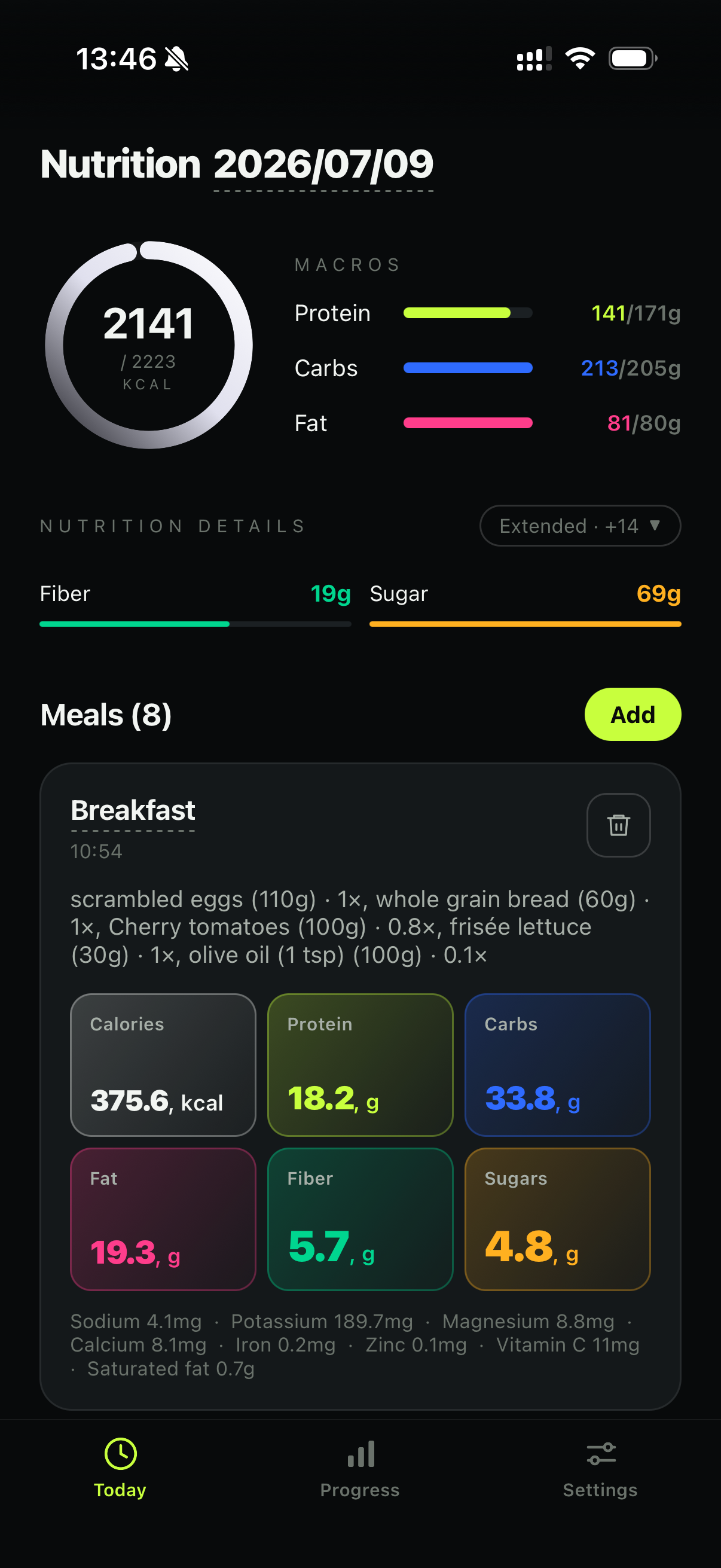
MacroDrop tracks all of these nutrients — core and extended — from a photo, your voice or a barcode. Offline USDA database, 7,800 foods.
Values come from the USDA FoodData Central entry Cheese, mozzarella, whole milk (FDC ID 170845), per 100 g. Daily values follow the FDA 2,000 kcal reference. Last reviewed August 2026.