Coconut Nutrition Facts
A 100 g serving of coconut contains 354 kcal, 3.4g protein (lime), 34g fat (pink) and 15g carbohydrate (blue). It's a good source of fiber and low in sugar. Its other nutrient values are modest — see the full breakdown below.
Core Nutrients per 100 g
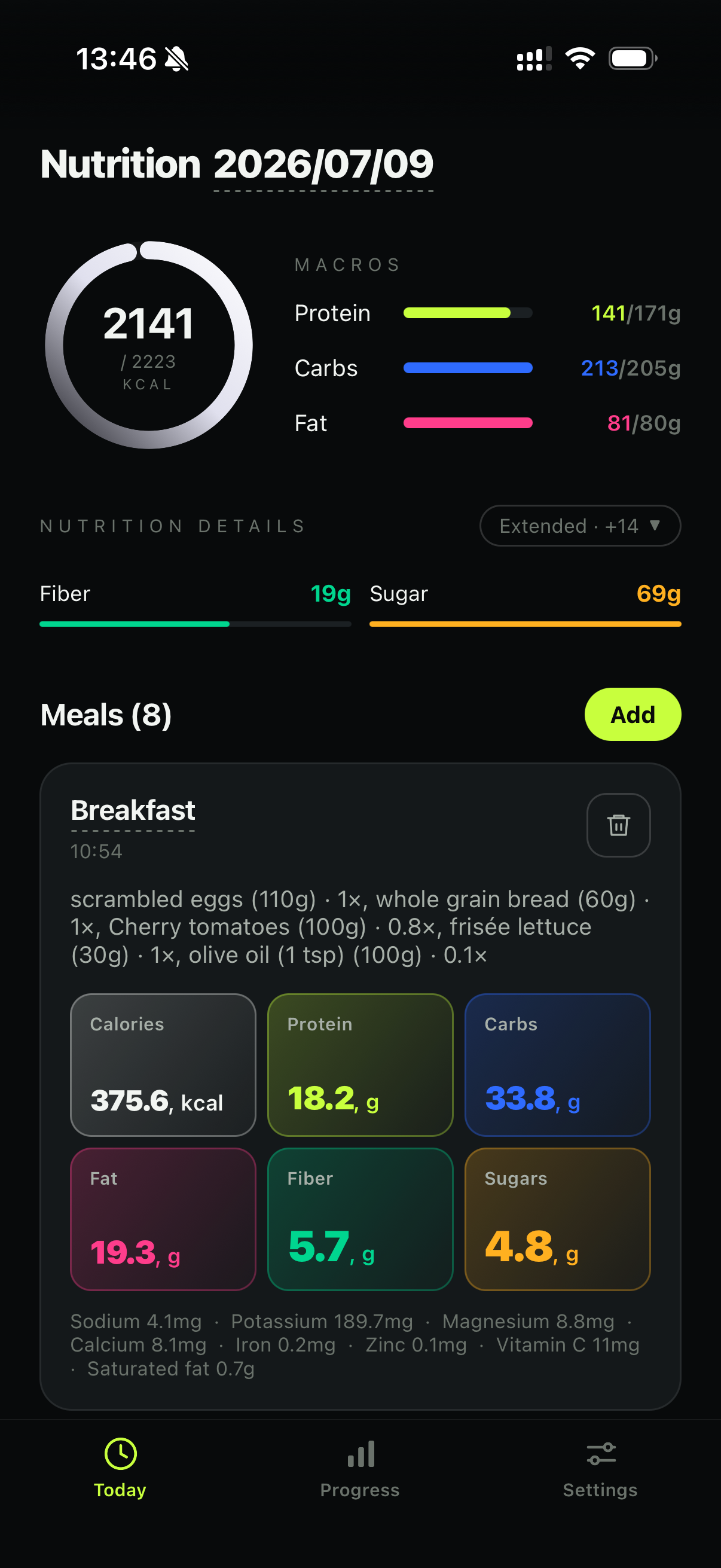
PER 100 G SERVINGThe six values MacroDrop shows on every meal card: energy, the three macros, fiber and sugars.
Extended Nutrients
PER 100 G SERVINGGrouped as in the app: lipids, minerals, vitamins and other compounds sit one level below the core six. Daily values follow the FDA 2,000 kcal reference.
Understanding Coconut Nutrition
Coconut is a nutrient-dense fruit prized for its natural sugars, fiber and vitamin content. At 354 kcal per 100 g serving, it provides 3.4g of protein, 15g of carbohydrate and 34g of fat. Coconut is particularly rich in saturated fat, delivering 30g — 149% of the daily value — in a single serving. It's a good source of fiber and low in sugar.
For athletes and anyone tracking macros, coconut is calorie-dense and works well for adding calories without added volume, thanks to its fat content. Its fiber and micronutrient content makes it a useful addition to a balanced macro split without pulling calories too high.
Frequently Asked Questions
How many calories are in a 100 g serving of coconut?
A 100 g serving of coconut has 354 kcal, 3.4g protein, 34g fat and 15g carbohydrate.
How much protein is in coconut?
3.4g per 100 g serving.
Is coconut high in sugar or fiber?
It's a good source of fiber and low in sugar — 9.0g fiber and 6.2g sugar per 100 g serving.
Which nutrients is coconut richest in?
No single micronutrient stands out sharply — see the full breakdown below.
Is coconut good for tracking macros?
For athletes and anyone tracking macros, coconut is calorie-dense and works well for adding calories without added volume, thanks to its fat content.
Log the coconut in two seconds
MacroDrop tracks all of these nutrients — core and extended — from a photo, your voice or a barcode. Offline USDA database, 7,800 foods.
Values come from the USDA FoodData Central entry Nuts, coconut meat, raw (FDC ID 170169), per 100 g. Daily values follow the FDA 2,000 kcal reference. Last reviewed August 2026.